Skip to content
Yamashita Aichi.

Research / Projects

Research Themes

High-Entropy type REBCO Superconducting Thin Films
Key Theme

High-Entropy type REBCO Superconducting Thin Films

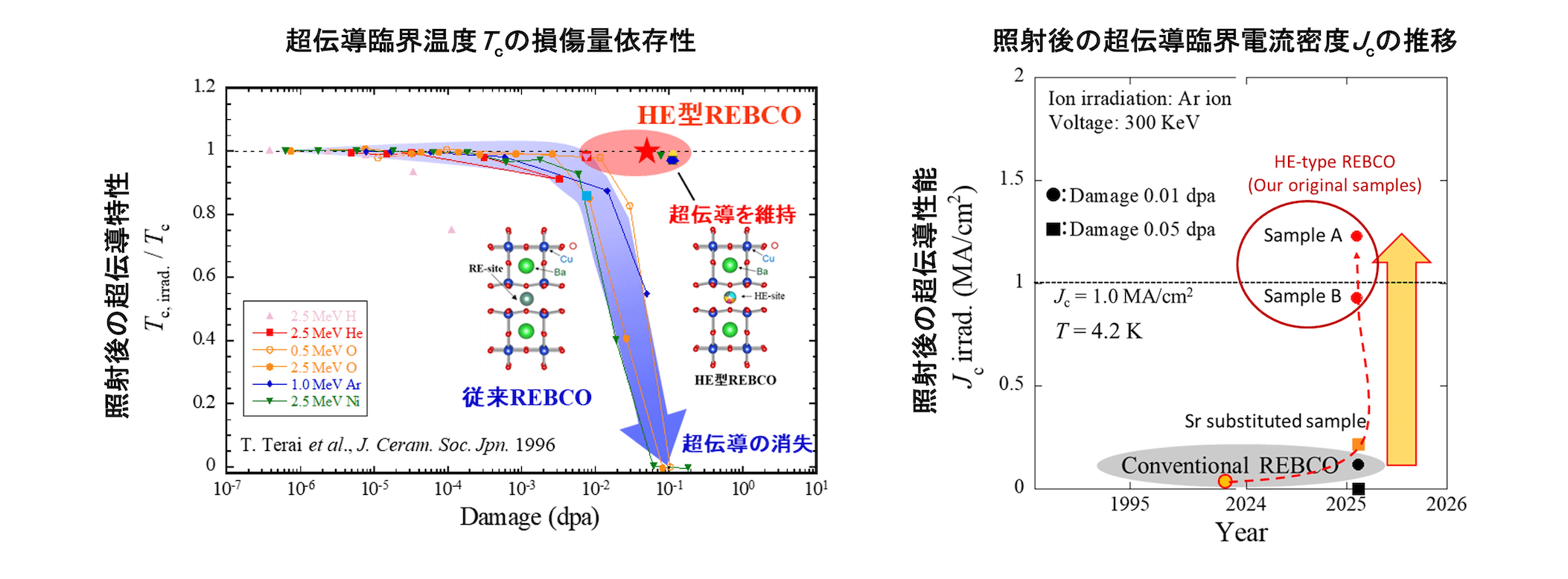
We fabricate high-entropy-type REBCO thin films by pulsed laser deposition (PLD), introducing multiple rare-earth elements into the RE and Ba sites of REBCO to form a multi-element solid solution. Substituting several rare-earth elements introduces artificial lattice disorder, enabling REBCO with strong resistance to degradation from particle irradiation. With applications to superconducting magnets for fusion reactors (such as compact fusion reactors like SPARC) in mind, our research focuses on improving irradiation resistance so that a high critical current density (Jc) is maintained even after particle irradiation. We have already filed multiple patents in Japan and overseas, and our research looks ahead toward real-world implementation.

  • Superconductivity
  • REBCO
  • Nuclear Fusion
  • Radiation Resistance
  • PLD
  • Jc Improvement
High-Entropy type Thermoelectric Materials
Key Theme

High-Entropy type Thermoelectric Materials

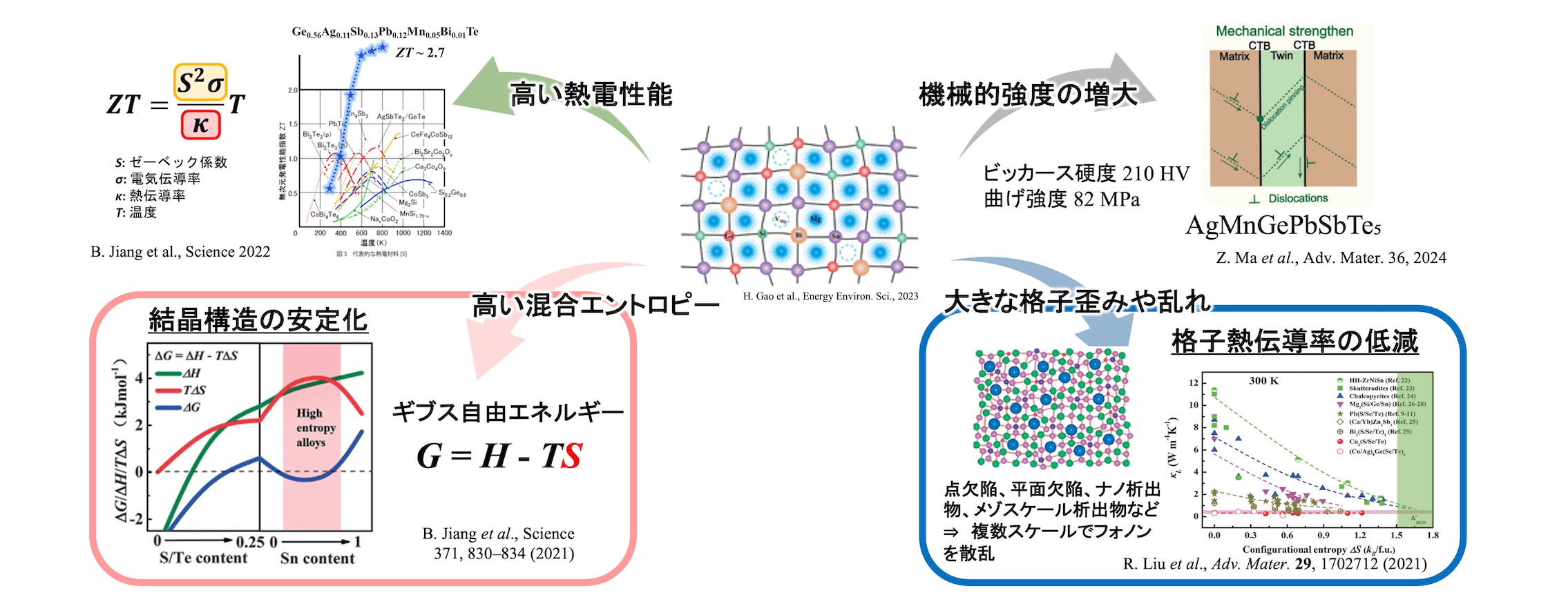
High-entropy alloys were expected to show high thermoelectric performance due to their low lattice thermal conductivity. We extend the high-entropy concept to compounds, and are developing new thermoelectric-conversion and thermal-switching materials that exploit disordered systems in these high-entropy-type compounds. Targeting mainly metal chalcogenide systems, we aim to simultaneously reduce lattice thermal conductivity and control electronic transport properties through multi-element substitution. We are currently also conducting joint research through industry-government-academia collaboration.

  • Thermoelectric Conversion
  • High-Entropy
  • High-Entropy Compounds
  • Thermal Switching

Projects

NEDO

Young Researchers' Industry-Academia Collaboration Platform (Wakasapo)

Research Seeds Introduction

High-Entropy Superconducting Materials with Improved Durability (Irradiation Resistance) and Performance for Quantum Chips and Magnets

A research seeds introduction page for our project selected for the Matching Phase of NEDO's Public-Private Program to Discover and Support Young Researchers (Wakasapo). In addition to academic and technical information, it covers our vision, use cases, and joint-research hypotheses.

JST FOREST

FOREST Program

Furuhara Panel

Realizing Irradiation-Resistant High-Entropy-Type Superconductors

The practical use of magnets based on the high-temperature superconductor REBCO has enabled the miniaturization of fusion reactors, and startups developing compact fusion reactors for commercialization are emerging both in Japan and abroad. However, an unresolved challenge remains: the degradation of REBCO magnets' superconducting properties caused by neutron irradiation. This research therefore aims to create an innovative HE-type REBCO with high irradiation resistance by incorporating the high-entropy (HE) alloy concept.

Media & Outreach

TMU

Tokyo Metropolitan University Research PR

TMU

Tokyo Metropolitan University Research Announcement (2021.01.20)

Research Announcement

Observation of Superconductivity Mechanism Switching Driven by Crystal Structure Symmetry Changes

Through isotope-effect studies of layered bismuth sulfide superconductors, the team observed evidence that the superconducting mechanism switches from conventional to unconventional as the crystal structure symmetry changes — a step forward in understanding the mechanisms behind unconventional superconductors.

Social Impact

01

Fusion Reactors

Application to high-temperature superconducting magnets. Highly irradiation-resistant HE-REBCO thin films are key to realizing fusion power.

02

MRI / Medical Devices

Contributes to improving the performance of REBCO wires used in the superconducting coils of high-field MRI systems.

03

Quantum Computers

Expected to improve the reliability of superconducting circuits and interconnects used for qubit control.

04

Waste Heat Recovery

We are developing technology that uses high-entropy thermoelectric materials to convert waste heat from factories and transportation into electricity.